Maybe ‘VisionQuest’ Really Can Reach What It’s Trying to Grasp
VisionQuest episodes five and six, “Firewall” and “Deadlock,” are, on the surface, quite different from one another. “Firewall” is all talk, no action; “Deadlock,” in contrast, is one of the most action-filled episodes we’ve seen so far. But, together, they paint an intriguing picture of an atypical Marvel TV series that might just be something special.

“Firewall” is the second episode in a row in which Paladin gets minimal screen time (he doesn’t appear at all in episode four, “Malware,” and shows up only briefly here), and it’s tough not to equate the character’s diminished presence with VisionQuest‘s noticeably sharpened focus. No disrespect to Todd Stashwick and Diane Morgan; a better enforcer and guy-in-the-chair duo I truly cannot imagine. But from the beginning, Paladin’s storyline, and specifically the mystery surrounding the identity of his client, has had a distinct “I’m only here to tie VisionQuest to the overarching Marvel Cinematic Universe” vibe.
And, look. Maybe VisionQuest creator Terry Matalas was being sincere when he told New Rockstars that “it’s not that kind of story.” I’d like to believe him! I really would. He’s clearly capable of creating great television; against all odds and common sense, Matalas told a remarkably affecting and thematically consistent story across four seasons of 12 Monkeys. But—to butcher Matalas’ words while echoing his sentiment—the MCU isn’t that kind of storytelling machine. It is simply not designed to contain works with strong, individual thematic identities because they all have to eventually work together as part of a larger whole.
That’s not a knock on the MCU; the scope of what Marvel Studios has created, with its dozens upon dozens of interconnected stories, is worthy of admiration. It’s just an acknowledgement that, by the time “Firewall” ends, what Matalas looks to be trying to do with VisionQuest is seemingly at odds with the purpose VisionQuest, and every other Marvel film and TV series, is designed to serve for the MCU. (And, perhaps more importantly, it is also at odds with what audiences have come to expect from a Marvel show.) And even when “Deadlock” seems, on the surface, to be shifting back toward more conventional MCU storytelling, there’s something that makes me think VisionQuest really might have different aspirations in mind.
I should back up, a bit, and explain why VisionQuest feels like such an outlier among other Marvel films and television shows. A typical single character-focused film or TV show in the MCU gives audiences a good idea of the character’s backstory, pits them against a tough-but-not-too-tough enemy, and shows off their powers and personality so we know what to expect from them when they inevitably show up in the next big team-up movie. Or, if they’ve been in the big team-up movie before their solo project is released, the solo project adds context to what we saw in the team-up. Think Ant-Man for the first scenario, Black Widow for the second.
VisionQuest ostensibly falls into the latter category, expanding on Avengers: Age of Ultron and WandaVision. But its gaze, so far, has been more internal than external. VisionQuest is a story about Vision searching for his identity and attempting to define, for himself and for others, who he is. That’s not unheard of in the MCU; again, Black Widow is an apt comparison here. But where Natasha (Scarlett Johansson) is the driving force of her story, much of Vision’s character development in VisionQuest is shown through the way he reacts to conversations other characters have about and around him. VisionQuest, in other words, is a show about Vision that frequently does not center him in the frame.
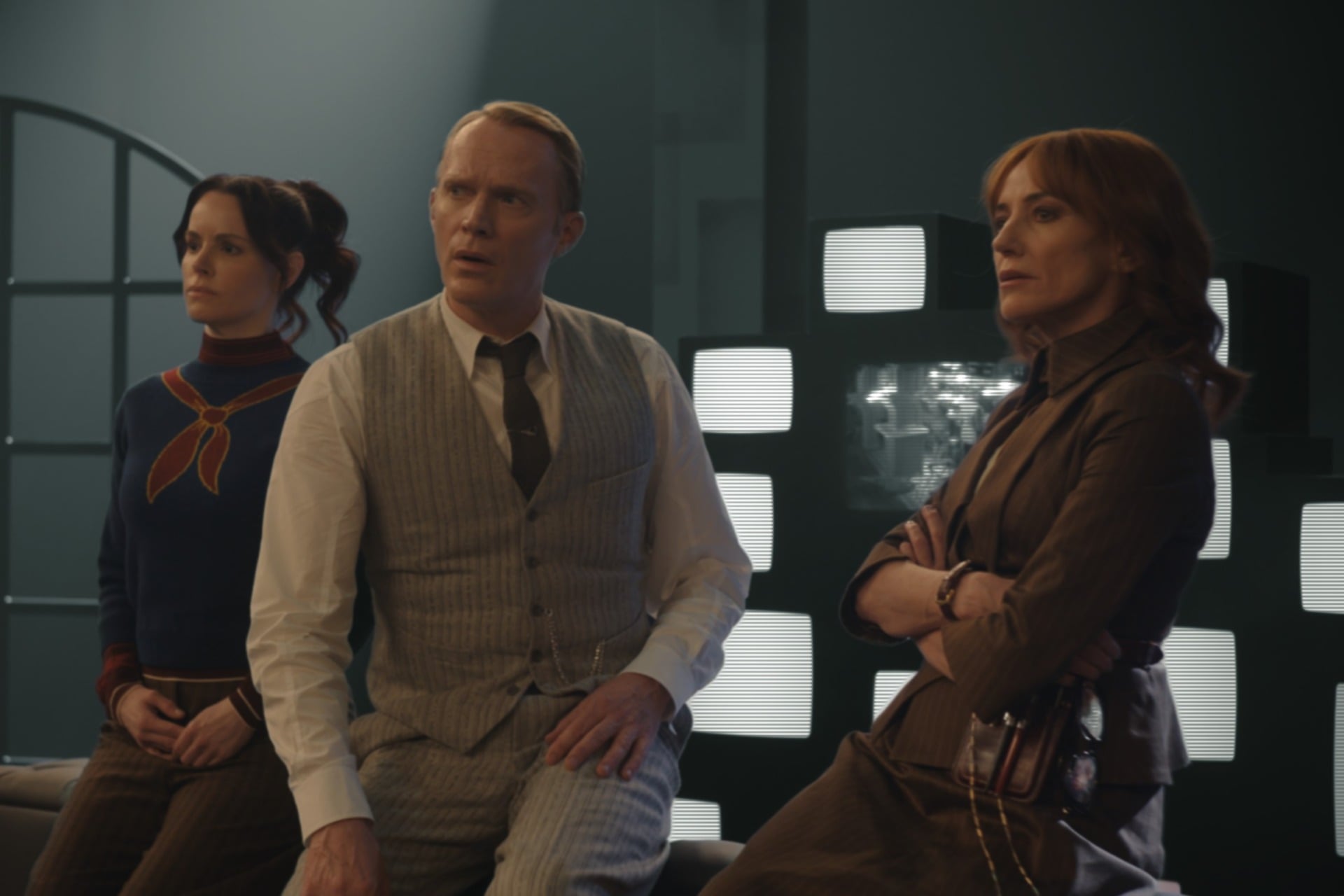
That’s especially apparent in “Firewall,” which spends much of its time focused on Ultron. While Vision, F.R.I.D.A.Y., E.D.I.T.H., D.U.M.-E., and U. are locked away in the attic of Vision’s Mindspace, Ultron is living it up in the real world, taunting Thomas and being caught out when Thomas gives as good as he gets. Ultron also has a meeting with Jo that quickly turns flirtatious. James Spader brings a uniquely weird sexual energy to the table, and somehow, it works. Whatever’s happening between Ultron and Jo is deeply fucked up, but I kind of love it.
And yet, even though Ultron is the focus of “Firewall,” Vision is undoubtedly its subject. He is the topic of Ultron and Thomas’ conversation in the pub, as Ultron tries to get under Thomas’ skin by telling him, “[Vision will] never be exactly what you want him to be, but he’s trying. Like a cheap tie. And maybe there is truth in his intention. But you’d be a fool if you didn’t arm yourself with the possibility that you’re going to be spending another Christmas grifting tourists, pretending you’re free, rather than just unwanted.”
But that just strengthens Thomas’ resolve against Ultron and convinces him that, even though Vision is currently not doing a very good job of connecting with Thomas (and humans in general), he is at least trying. There’s still hope for Vision, unlike Ultron.
Later, when Vision is watching the conversation between Ultron and Jo, you can practically see Vision’s resolve strengthening as Jo looks at Ultron and says, “Together, we could murder the world.” He will keep his firewalls up, stay locked up in his own mind forever, if it means not letting Ultron get loose ever again.
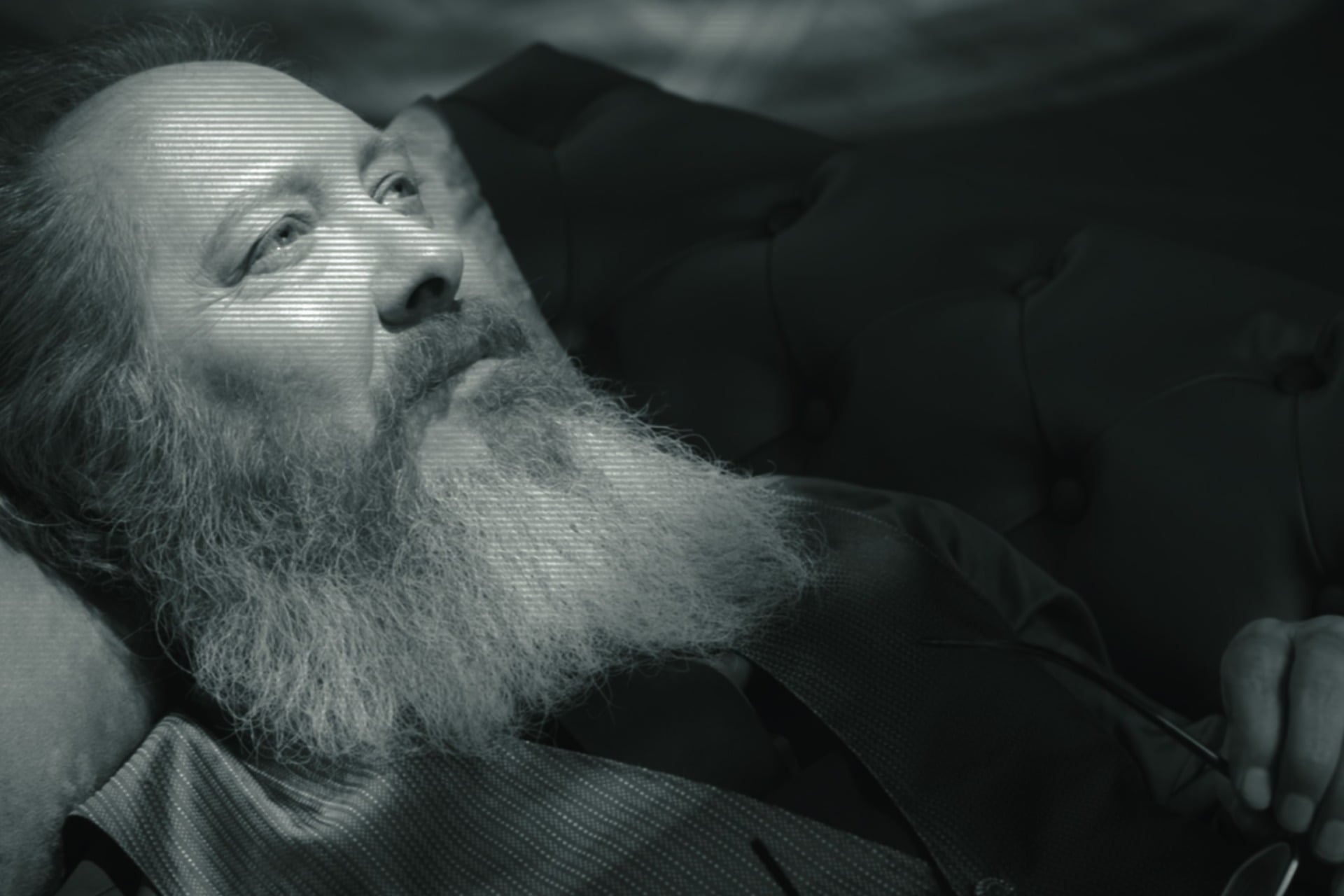
Ultron, however, has never found a situation he cannot throw a wrench into, and Vision’s newfound clarity of purpose gets muddled when Ultron allows Paladin to kidnap Thomas. If Vision wants to save Thomas, he’s going to have to drop the firewall and let Ultron loose. It’s the only way he can regain control of his body. He’s facing the deeply human debacle of what to do when protecting a loved one could mean endangering many others—and he hasn’t even decided how human he wants to be yet, nor what, exactly, Thomas means to him. But after a steadying breath, he throws the switch anyway, dropping the firewall and letting Ultron escape. F.R.I.D.A.Y. also runs off into the digital ether before the firewall comes back online, a move that blindsides E.D.I.T.H. and the audience alike.
When Vision regains control of his body, he’s on a cargo plane bound for Madripoor, where Paladin has taken Thomas, with Lisa. They’re going to get Thomas back.
It makes sense that the next episode is set up to be more intrigue and action-heavy after “Firewall” spent nearly its entire runtime on intimate conversations, but its tight focus and genuinely thoughtful exploration of VisionQuest‘s themes was a refreshing change of pace.
“Deadlock,” as expected, is much more zippy. As Vision and Lisa confront Paladin to rescue Thomas in Madripoor, the show brings back many of the Marvel storytelling hallmarks that “Firewall” was missing. Whatever Ultron and Jo (he finally calls her “Jocasta” for the first time in this episode) are up to with the technology she hid away before her death feels like it’ll have implications beyond VisionQuest. We learn a bit about Paladin’s backstory, and it paints him in a more complicated light than simply being a villain. The looming mystery of Paladin’s client returns, too. We even get an out-of-left-field cameo from a long-forgotten character in Raza (Faran Tahir), who last appeared in Iron Man in 2008.
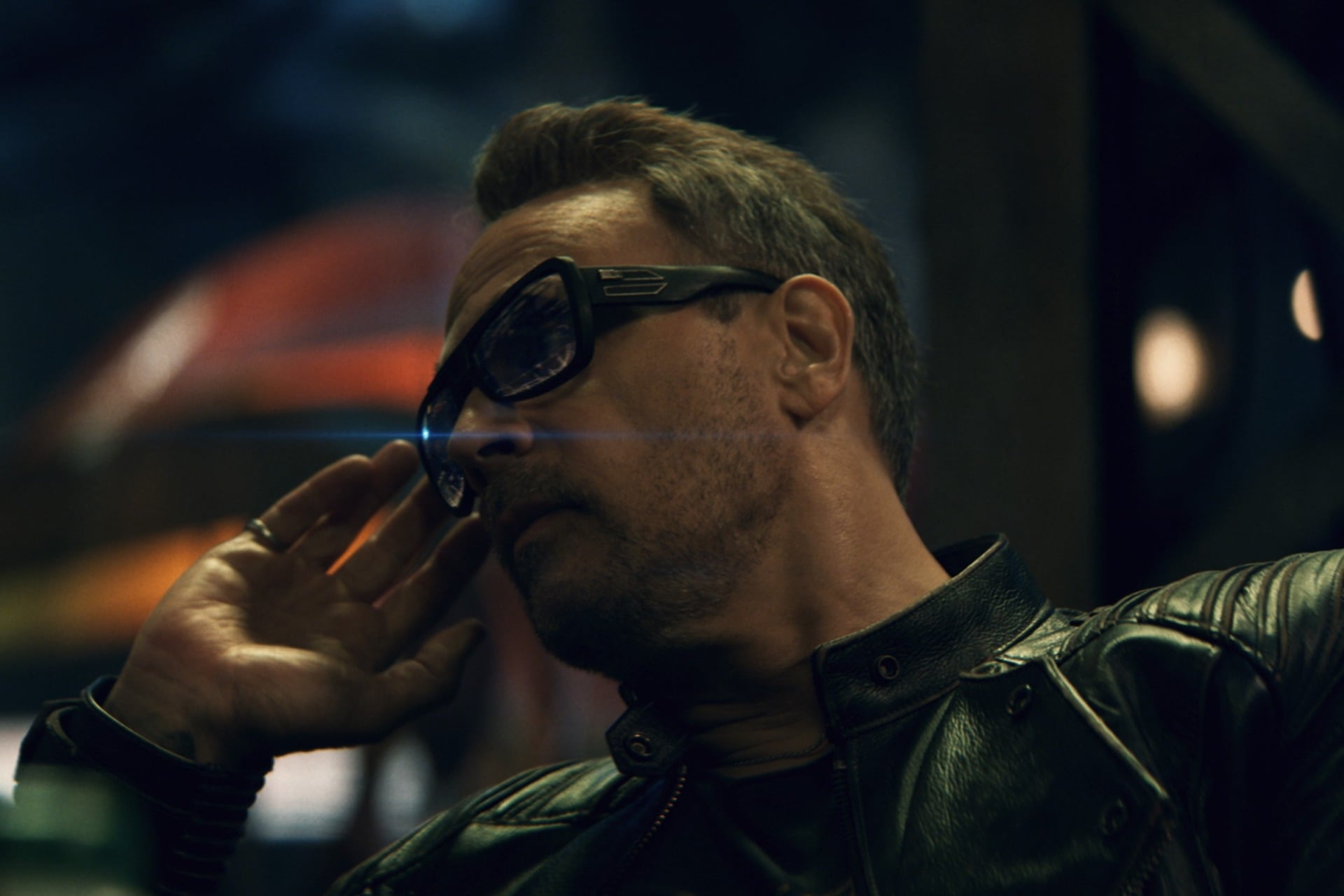
It would all feel far too disconnected from “Firewall” were it not for something the client says when they speak directly to Vision for the first time. “I am the one hunting you,” the client says. “But I’m also the one who can end your suffering. You died for love. But rebuilt, reborn without that love. I cannot imagine the pain you are in right now. How empty you must feel. A tin man without a heart. I can give you that heart, the soul you came back to life without.”
It’s an interesting reveal that reframed how I thought the client fit into VisionQuest‘s narrative. Suddenly, the client isn’t just a device to connect VisionQuest to the MCU. They’re actively reinforcing the questions about the difference between understanding something intellectually and actually being able to feel it that the show has been grappling with from the start.
The client’s offer makes it hit a lot harder when Vision finally tells Thomas about WandaVision and what happened in Westview. This is the thing he was struggling with back in episode three, running simulation after simulation that always ended with Thomas getting angry and walking away. But all it takes is a few small tweaks and a lot more honesty and vulnerability and Thomas doesn’t walk away this time. He just asks if that’s where his memories of Vision come from.
“No,” Vision replies. “No, Thomas. Not me.”
Without what the client is offering him, there will always be a gap that Vision cannot bridge between his past and present selves. And now that he’s accepted that Thomas is, at least in part, Tommy Maximoff, and is therefore, at least in part, his past self’s son, it’s going to be a lot harder to turn down.
Maybe Matalas is right. Maybe VisionQuest really isn’t the type of show where the villain’s identity is the most important thing. Maybe it it is taking a swing on what an MCU film or TV series can be. Wouldn’t it be something if it could pull it off?
New episodes of VisionQuest air Tuesdays on Disney+.
Want more io9 news? Check out the best movies and TV shows to stream this month and all the upcoming sci-fi, fantasy, and horror books that should be on your radar.
Post Comment